
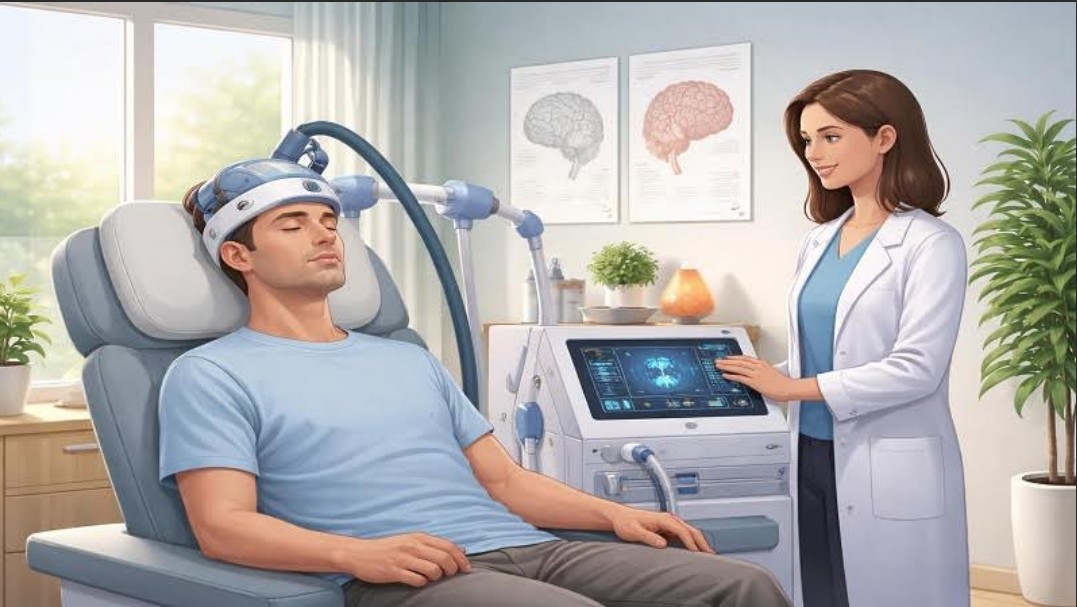
Depression that doesn’t respond to traditional treatments can leave patients searching for effective alternatives. Transcranial magnetic stimulation (TMS) therapy offers an FDA-cleared, noninvasive treatment option for depression and OCD, and finding affordable care in York can make this innovative approach accessible to more people.
TMS uses targeted magnetic pulses to stimulate brain regions involved in mood regulation, similar to the technology found in MRI machines. Unlike antidepressant medications, this therapy doesn’t produce systemic side effects throughout the body. The treatment has shown effectiveness for individuals with treatment-resistant depression who haven’t found relief through other methods.
Understanding the costs and coverage options for TMS therapy helps patients make informed decisions about their mental health care. This guide explores how to locate affordable TMS services in the York area, what to expect from treatment, and how this therapy works to relieve symptoms of depression.
Finding Affordable TMS Therapy in York Near You
Locating affordable TMS therapy in York requires understanding where clinics operate, how providers differ in their services and pricing, and which insurance plans cover treatment costs.
How to Locate a Local TMS Clinic
Patients can find a TMS clinic in York through multiple search methods. Online directories specializing in TMS therapy listings provide filtered results based on location and treatment type. Direct searches for “TMS therapy York PA” or “TMS clinic near me” return local options including York TMS Clinic on N George St and WellSpan Health facilities.
Primary care physicians and psychiatrists often maintain referral networks with TMS providers and can recommend specific clinics based on patient history. Mental health professionals familiar with treatment-resistant depression typically know which facilities offer NeuroStar Advanced TMS or similar FDA-cleared systems.
Calling clinics directly allows patients to verify location details, hours of operation, and whether they accept new patients. Many TMS clinics maintain websites with contact forms for initial inquiries. York TMS Clinic specifically emphasizes pressure-free consultations for those exploring options.
Comparing TMS Providers and Clinic Options
TMS clinics in York differ in equipment, treatment protocols, and patient support services. York TMS Clinic uses NeuroStar Advanced TMS systems, marketed as the number one doctor-recommended TMS treatment. WellSpan Health offers transcranial magnetic stimulation through their broader healthcare network.
Patients should compare session length, total treatment duration, and the number of sessions required per protocol. Standard TMS therapy typically involves daily sessions over several weeks. Some providers treat depression, anxious depression, and OCD, while others focus solely on depression.
Staff qualifications and clinic specialization matter for treatment outcomes. York TMS Clinic employs trained professionals who create customized treatment plans. Asking about staff credentials and patient-to-provider ratios helps assess care quality. Reading patient reviews and testimonials provides insight into real experiences at different facilities.
Insurance Coverage and Payment Options (Including Medicare, Aetna, Cigna, Tricare, Blue Cross Blue Shield)
Most major insurance plans now cover TMS therapy for treatment-resistant depression when specific criteria are met. Medicare typically covers TMS after patients have tried and failed at least four antidepressant medications. Aetna, Cigna, Blue Cross Blue Shield, and Tricare have similar requirements but policies vary by plan type and state.
Patients must verify coverage before starting treatment by contacting their insurance provider directly. Key questions include prior authorization requirements, in-network versus out-of-network benefits, copay amounts, and deductible status. TMS clinics often have billing specialists who verify insurance accepted and handle pre-authorization paperwork.
Out-of-pocket costs vary significantly. Self-pay options may include payment plans or financing arrangements. Some clinics offer reduced rates for uninsured patients. Getting cost estimates in writing prevents billing surprises later.
Coverage typically requires documentation of failed medication trials and ongoing psychiatric care. Insurance companies may request medical records proving treatment resistance before approving TMS therapy.
Understanding TMS Therapy for Depression Treatment
Transcranial magnetic stimulation offers a scientifically-backed approach for individuals who haven’t responded to traditional depression treatments. This FDA-approved therapy uses magnetic technology to target specific brain regions involved in mood regulation.
What Is Transcranial Magnetic Stimulation and How Does It Work?
TMS therapy uses magnetic pulses to stimulate nerve cells in specific regions of the brain associated with mood control and depression. The technology works similarly to an MRI machine, generating focused magnetic fields that pass through the skull without requiring surgery or anesthesia.
During treatment, a magnetic coil placed against the scalp delivers brief pulses to the prefrontal cortex. These pulses create small electrical currents that activate neurons in underactive brain areas common in depression. The stimulation helps restore normal brain activity patterns.
Systems like NeuroStar Advanced TMS Therapy deliver precisely targeted magnetic pulses at specific frequencies and intensities. The magnetic fields reach about 2-3 centimeters into the brain tissue. This depth allows the treatment to affect the dorsolateral prefrontal cortex while leaving other brain areas unaffected.
The treatment doesn’t require sedation, and patients remain fully awake throughout each session. Most protocols involve daily sessions over several weeks to achieve optimal results.
Who Is a Candidate for TMS Therapy?
Individuals diagnosed with major depressive disorder who haven’t found relief through traditional antidepressant medications typically qualify for TMS therapy. Patients usually need to have tried at least two different antidepressant medications without adequate improvement.
The FDA has approved TMS for adults with treatment-resistant depression. Some providers offer the therapy to qualifying patients over age 15. Patients with anxious depression or obsessive-compulsive disorder may also be candidates, as research supports TMS effectiveness for these conditions.
Key qualifying factors include:
- Diagnosis of major depressive disorder
- Inadequate response to prior antidepressant trials
- No metallic implants in or near the head
- No history of seizures or certain neurological conditions
Providers typically work with insurance companies to obtain prior authorization support, verifying coverage and medical necessity. Patients undergo psychiatric evaluation to confirm they meet clinical criteria before starting treatment.
Benefits of Non-Invasive Treatment for Treatment-Resistant Depression
TMS therapy offers significant advantages over more invasive procedures like electroconvulsive therapy. The treatment requires no anesthesia, produces no systemic side effects, and allows patients to drive themselves to and from appointments.
Unlike medications, transcranial magnetic stimulation doesn’t cause weight gain, sexual dysfunction, or gastrointestinal problems. Patients don’t experience memory loss or cognitive impairment. The most common side effect is mild scalp discomfort during treatment, which typically decreases after the first few sessions.
The non-invasive nature means no recovery time between sessions. Patients can return to work or daily activities immediately after each appointment. This practical advantage makes TMS therapy accessible for individuals who cannot take extended time off.
Clinical studies demonstrate effectiveness rates of 50-60% for patients with treatment-resistant depression, with many experiencing significant symptom improvement. The treatment provides an option when traditional therapies haven’t worked.
What to Expect During a TMS Session
Each TMS session typically lasts between 20-40 minutes. The patient sits in a comfortable chair while a technician positions the magnetic coil against a specific location on the scalp.
The treatment produces a tapping sensation and clicking sounds as the device delivers magnetic pulses. Patients receive earplugs to reduce noise exposure. Most people describe the sensation as tolerable, though some experience mild discomfort during initial sessions.
A standard treatment course involves sessions five days per week for 4-6 weeks. The total number of sessions ranges from 20-36, depending on individual response and protocol. Providers monitor progress throughout treatment and adjust parameters as needed.
Patients remain awake and alert during the entire session. They can read, listen to music, or watch television. After treatment concludes, patients leave the clinic without restrictions on driving or other activities.