
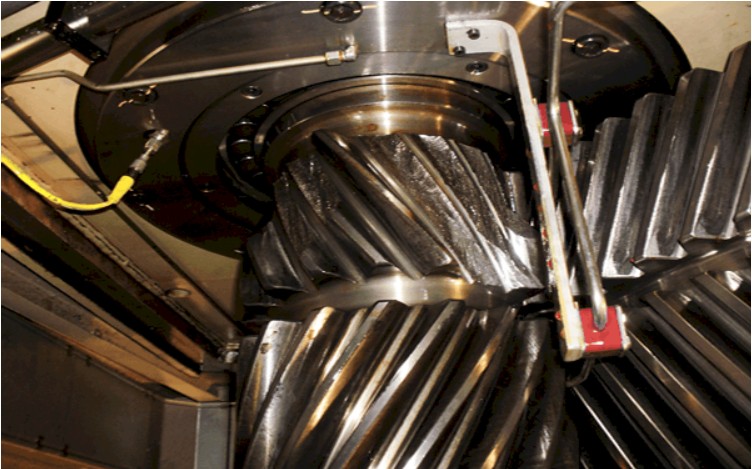
Rotating machinery is at the forefront of many industrial processes, ranging from manufacturing facilities to power plants. However, when an imbalance begins to affect such equipment, it can lead to problems such as vibration, noise, and increased rates of wear. Dynamic balancing, when done as part of a preventive maintenance routine, offers a solution to such problems before they become full-blown equipment failures. Through active balancing, maintenance personnel have a useful tool that helps to ensure machines are balanced and their components are protected. The next sections highlight five important advantages that make dynamic adjustment an essential part of maintenance.
Reduced Vibration and Smoother Operation
Excessive vibration is one of the first signs of imbalance in a rotating assembly. By using active balancing, the actual cause of imbalance is addressed, ensuring proper alignment of the rotating forces. As a result, the overall level of vibration decreases significantly, ensuring smooth operation of the machine over its entire range. This greatly improves the comfort of the operator, as well as reducing noise and stress on the surrounding structures. The bearings, seals, and couplings also benefit from the smoother motion, ensuring proper alignment and reducing the likelihood of secondary problems occurring. This makes the performance of the machine more predictable, ensuring that the schedule remains steady and quality control remains easy.
Improved Reliability and Fewer Unplanned Shutdowns
Reliability is founded on the basis of consistency, and imbalance is an obstacle to achieving this because it introduces changing forces, leading to fatigue. Dynamic adjustment, therefore, is an improvement to machine reliability because it ensures balance before damage occurs. If machines are running without excessive oscillatory movement, their critical components are subjected to steady loading rather than periodic shocks. This reduces the chances of unexpected failures, which would compromise operations. Planners are also more confident during maintenance planning because balanced equipment is more consistent in operation. This means there are fewer unplanned maintenance sessions, thus better resource planning and increased trust between maintenance and operations teams.
Extending Equipment Lifetime Through Controlled Wear
Perhaps one of the most important benefits that can be reaped from active balancing is its ability to increase the lifespan of machinery. As explained, imbalanced parts are prone to uneven wear, which can reduce their lifespan. By correcting these imbalances, dynamic positioning ensures that parts are worn down at a controlled rate. Eventually, these parts are able to last longer. Organizations that invest in reliable dynamic balancing services that focus on preventive maintenance often see capital assets remain productive well beyond expaected service horizons. Longer equipment life reduces capital expenditure pressure while supporting sustainable asset management practices.
Enhanced Energy Efficiency and Performance Stability
Imbalanced machines tend to use a lot of energy since the motors have to work extra hard to counter the erratic motion. Active balancing, on the other hand, ensures maximum energy efficiency as the parts of a rotating machine can rotate freely without any form of resistance due to improper positioning. As a result, the motors tend to use less energy, and there is no change in temperature. All this results in a stable machine, and this is a clear advantage of balancing, as it will lead to cost savings after a long period of use. This is a clear advantage of balancing, as it will lead to cost savings after a long period of use.
Increased Safety and Maintenance Effectiveness
The safety of the working environment remains a top priority in all industries, and dynamic adjustment plays a direct role in this regard by minimizing the risk of mechanical failure. When there is too much vibration, this can lead to a loosening of parts, a weakening of foundations, or even a breaking of parts, all of which can be hazardous. When a machine is balanced, this makes it a safer working environment as the risk of a part suddenly being ejected from the machine or the foundations weakening is reduced. It also makes maintenance easier, as there is no need to deal with emergencies. Having a set of vibration baselines makes condition monitoring easier, which strengthens the accuracy of diagnosis.
In conclusion, dynamic balancing is much more than a corrective solution for noisy equipment, as it provides tangible value in terms of reliability, efficiency, safety, and equipment life. By incorporating active balancing into a preventive maintenance strategy, organizations can proactively address imbalance problems before they become expensive. This is an intelligent investment for any facility that relies on rotating equipment.