
Depression affects millions of people, and traditional treatments don’t work for everyone. When antidepressants and talk therapy fall short, individuals struggling with treatment-resistant depression need alternative options that can provide real relief.
Transcranial Magnetic Stimulation (TMS) therapy offers a non-invasive, medication-free approach to treating depression by using magnetic pulses to stimulate specific areas of the brain. This FDA-cleared treatment has helped thousands of patients achieve meaningful improvement in their symptoms. Multiple providers in Coral Gables now offer TMS therapy, making this advanced treatment accessible to local residents.
For those who have exhausted conventional treatment methods, understanding how TMS works and where to access it in Coral Gables can be the first step toward recovery. Most major insurance plans cover TMS therapy, and many clinics offer free consultations to determine if patients qualify for this innovative treatment option.
Defeat Depression with TMS Therapy in Coral Gables
Transcranial magnetic stimulation offers a proven alternative for individuals in Coral Gables, Florida who haven’t responded to conventional depression treatments. This FDA-approved therapy targets specific brain regions using magnetic pulses, delivering results without medication or invasive procedures.
What Is Transcranial Magnetic Stimulation (TMS)?
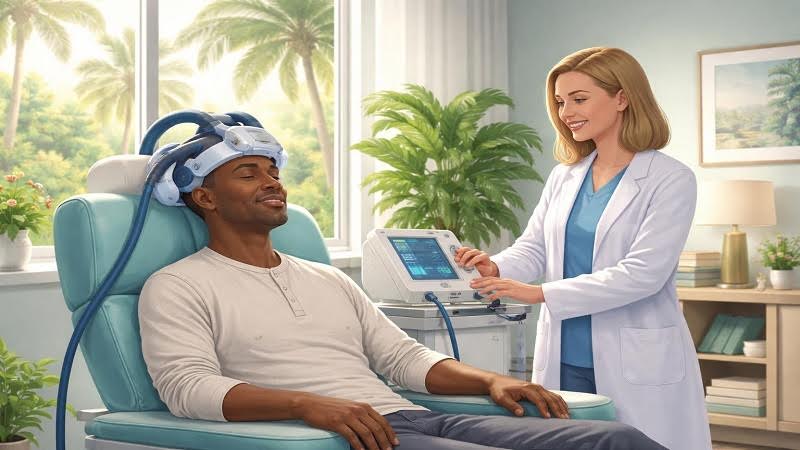
TMS is a non-invasive medical procedure that uses magnetic fields to stimulate nerve cells in the brain. The treatment involves placing an electromagnetic coil against the scalp near the forehead, which delivers focused magnetic pulses to areas of the brain involved in mood regulation.
Each TMS session typically lasts between 20 to 40 minutes. During treatment, patients remain awake and alert while the device delivers repetitive magnetic pulses to the targeted brain region. The magnetic fields pass through the skull and generate small electrical currents that activate neurons.
The procedure requires no anesthesia or sedation. Patients can drive themselves to and from appointments and return to normal activities immediately afterward. A standard TMS treatment course consists of five sessions per week for four to six weeks, though the exact duration depends on individual response.
Is TMS Therapy Effective for Treatment-Resistant Depression?
Clinical studies demonstrate that TMS therapy produces significant results for treatment-resistant depression. Research shows that approximately 50-60% of patients with treatment-resistant depression experience meaningful improvement in their symptoms. About one-third of these patients achieve complete remission.
The therapy specifically targets the dorsolateral prefrontal cortex, a brain region associated with mood regulation that often shows decreased activity in depression. Multiple clinical trials have confirmed TMS effectiveness for patients who haven’t responded to antidepressant medications.
Results from TMS treatment in Coral Gables align with national outcomes. Over 4 million TMS treatments have been administered nationwide, with 83% of patients reporting symptom improvement. The benefits often persist long after treatment completion, with many patients maintaining their progress for months or years.
Minimal Side Effects and Non-Invasive Nature
TMS therapy produces minimal side effects compared to antidepressant medications. The most common side effect is mild scalp discomfort or headache during or after treatment sessions, which typically decreases after the first week. These symptoms respond well to over-the-counter pain relievers.
Unlike medications, TMS causes no systemic side effects such as weight gain, sexual dysfunction, or digestive issues. Patients don’t experience cognitive impairment or drowsiness. The non-invasive nature means no surgical incisions, no implanted devices, and no recovery period.
Serious side effects are rare. The risk of seizure is extremely low, occurring in less than 0.1% of patients. TMS doesn’t require hospitalization or monitoring after sessions, allowing patients in Coral Gables to maintain their regular schedules.
Comparison of TMS and Traditional Depression Treatments
|
Treatment Aspect |
TMS Therapy |
Antidepressant Medications |
Electroconvulsive Therapy (ECT) |
|
Invasiveness |
Non-invasive |
Non-invasive |
Requires anesthesia |
|
Side Effects |
Minimal |
Moderate to significant |
Significant |
|
Treatment Duration |
4-6 weeks |
Ongoing daily use |
2-4 weeks |
|
Response Rate |
50-60% |
40-60% |
70-90% |
|
Maintenance |
Occasional sessions if needed |
Daily medication |
Periodic sessions |
TMS occupies a unique position between medications and ECT. It offers effectiveness rates comparable to antidepressants without systemic side effects. While ECT shows higher response rates, TMS provides a less invasive option that doesn’t require anesthesia or cause memory problems.
Traditional talk therapy remains valuable but often works best when combined with other interventions. TMS can complement psychotherapy for patients with treatment-resistant depression. Unlike medications that require daily adherence, TMS provides lasting changes to brain activity patterns after the initial treatment course ends.
Insurance coverage for TMS treatment in Florida has expanded significantly. Most major insurance plans now cover TMS therapy for patients who haven’t responded to antidepressant trials, making it accessible to more individuals in Coral Gables seeking alternatives to traditional treatments.
Accessing Innovative Depression Care in Coral Gables
Coral Gables offers several pathways to advanced depression treatment, with multiple clinics providing FDA-cleared TMS therapy alongside complementary approaches. Patients can access technologies like NeuroStar and Spravato through various providers, with most major insurance plans covering these evidence-based treatments.
Choosing the Right TMS Provider or Clinic
Selecting a TMS provider in Coral Gables involves evaluating clinical expertise, treatment protocols, and patient support services. Success TMS, Greenbrook TMS Neurohealth Centers, and South Florida Med Group are established providers in the area offering transcranial magnetic stimulation for treatment-resistant depression.
Key factors include the clinic’s experience with TMS protocols, the qualifications of the treatment team, and whether the facility offers comprehensive assessments before beginning therapy. Some centers provide free initial consultations to determine candidacy for TMS treatment. The availability of psychiatrists and therapists on staff can ensure coordinated care throughout the treatment process.
Mind & Soul Therapy & Acupuncture represents a different approach, integrating holistic wellness practices with mental health services. This type of facility may appeal to patients seeking treatment that addresses multiple aspects of wellbeing.
Available Technologies: NeuroStar and More
NeuroStar TMS Therapy is FDA-cleared for major depressive disorder and decreasing anxiety symptoms in patients with comorbid anxiety. The NeuroStar Advanced Therapy system delivers targeted magnetic pulses to specific brain regions involved in mood regulation. This non-invasive, medication-free treatment requires no anesthesia or sedation.
Spravato (esketamine nasal spray) represents another innovative option available at facilities like Greenbrook. This treatment is administered under medical supervision and works through a different mechanism than traditional antidepressants. Esketamine is specifically indicated for treatment-resistant depression and requires observation after each session.
Both technologies offer alternatives when standard antidepressant medications and talk therapy have not provided adequate relief. Clinical data shows that approximately 83% of patients experience improvement with TMS therapy, with over 4 million treatments administered nationwide.
Integrating Holistic Treatments and Team-Based Care
Several Coral Gables providers incorporate holistic wellness approaches alongside TMS and medication-based treatments. Acupuncture services may be available at centers like Mind & Soul Therapy, offering complementary pain relief and stress reduction benefits. This integration recognizes that depression often coexists with physical symptoms and chronic conditions.
Team-based care models involve psychiatrists, therapists, and medical staff working collaboratively on treatment plans. A psychiatrist typically oversees medication management and TMS protocols, while therapists provide ongoing psychotherapy support. Some clinics coordinate with primary care physicians to address physical health factors that may impact depression outcomes.
Rafael Padro and similar practitioners in the area may offer specialized expertise in integrative mental health approaches. This comprehensive model addresses nutrition, sleep, exercise, and other lifestyle factors alongside primary depression treatments.
Consultation, Insurance Coverage, and Next Steps
Initial consultations at TMS clinics typically involve diagnostic screening, treatment history review, and assessment of candidacy for neuromodulation therapies. These evaluations determine whether a patient meets FDA criteria for TMS or Spravato treatment. Most providers offer no-cost consultations to discuss options before committing to a treatment plan.
Insurance coverage is available through most major plans for FDA-cleared treatments like NeuroStar TMS therapy. Molina and other insurance networks may cover both TMS and esketamine treatments when medical necessity criteria are met. Providers handle prior authorization processes and verify benefits before treatment begins.
The typical net out-of-pocket cost varies based on individual insurance plans, deductibles, and copayment structures. Many clinics offer payment assistance or financing options for portions not covered by insurance. Treatment duration generally spans 4-6 weeks for TMS, with sessions occurring five days per week.