
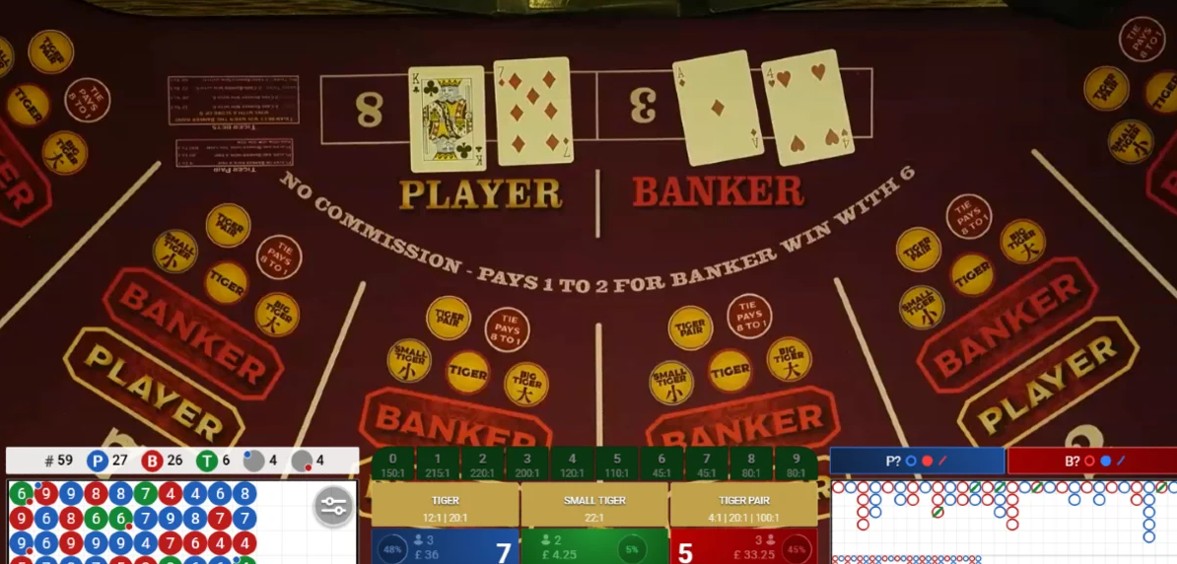
Baccarat moves quickly, which means most financial damage happens not from one huge mistake but from many small, unplanned choices. Defining your own rules before the first bet gives you a private framework that limits how far any session can go, even when emotions and table energy are pushing in the opposite direction.
Why Self-Imposed Rules Matter More Than “Systems”
Because baccarat is driven by fixed rules and a house edge that does not change, no betting pattern can turn it into a reliably profitable venture over time. What you can control, however, is the size and frequency of your bets and the total exposure you accept in one sitting, which is exactly what personal rules are designed to regulate. Without those boundaries, it becomes easy to drift from entertainment into reactive gambling, especially when streaks and fast dealing compress decision time.
Rule 1: Fix a Hard Loss Limit and Session Bankroll Before You Play
The first non‑negotiable rule is to decide how much you are willing to lose in a single session and to ring‑fence that money physically or digitally before you ever see a shoe. Bankroll guidelines for baccarat often recommend risking only a small fraction of your total gambling funds per session—commonly around 10%—so that one bad outing never wipes out your entire budget. Within that session amount, advisory pieces frequently suggest keeping each bet to 1–5% of the session bankroll, which keeps ordinary losing streaks from emptying your stack in just a few coups.
This structure creates a clear cause‑and‑effect chain: by fixing both the maximum session loss and the typical bet size, you define in advance how many hands you can survive and the worst‑case cost if everything goes badly. If you reach your loss cap, the rule is that the session ends—no topping up, no borrowing from future bills, no “just one more shoe.” The impact is that even on emotionally rough nights, the damage remains bounded and you preserve both funds and psychological stability for future sessions instead of trying to recover in a panic.
Table: example of aligning bets with a fixed session bankroll
| Total Gambling Bankroll | Max per Session (10%) | Recommended Bet Size (2–5% of Session) | Hands Before Bust* |
| 5,000 units | 500 units | 10–25 units | ~20–50 hands |
| 10,000 units | 1,000 units | 20–50 units | ~20–50 hands |
| 20,000 units | 2,000 units | 40–100 units | ~20–50 hands |
*Approximate, assuming flat betting and no extreme streaks.
Seeing these numbers forces you to acknowledge how quickly your bankroll can vanish if you set bet sizes too high relative to your session cap. When you lock in a combination that feels sustainable, you can carry it to the table as a rule, not as a suggestion, and judge every urge to increase stakes against this pre‑defined structure rather than against a vague feeling that you are “due” to win.
Rule 2: Decide Which Bets Are Allowed—and Which Are Off-Limits
Your second rule should define a narrow menu of bets you will actually use. Strategy and mistake guides repeatedly highlight that while Player and Banker have relatively low house edges, Tie and many side bets carry much worse odds despite exciting payouts. New players often scatter chips on these higher‑edge options when they feel bored or behind, not realizing that they are effectively increasing the คาสิโนออนไลน์ advantage on each hand.
By stating in advance “I will only bet on Player and Banker” or “Tie and side bets are off‑limits,” you transform a loose preference into a strict boundary. The immediate outcome is that your average house edge stays near baccarat’s most favorable level instead of creeping upward every time a flashy proposition bet catches your eye. Over many sessions, that single rule has a large impact on how long your bankroll lasts and how volatile your results feel, because it filters out wagers designed to trade short bursts of excitement for faster long‑term loss.
Rule 3: Set Time Limits and Breaks to Prevent Tilt
Fast dealing and constant small decisions can make time blur, which is why responsible gambling resources emphasize time limits and regular breaks alongside financial caps. Without a clock‑based rule, you may find that fatigue, alcohol, or frustration gradually erode your judgment, leading you to ignore your own bankroll plan and push for “one big recovery” at the end of a long night. A practical rule might be to cap each session at a fixed duration—say 60 or 90 minutes—with at least one scheduled break at the midpoint.
The effect of this boundary is twofold. First, it creates natural checkpoints where you step away from the table, reassess your mental state, and decide whether continuing aligns with your original goals. Second, it prevents you from extending sessions indefinitely in response to short‑term results, because the pre‑set time limit is independent of whether you are up or down. That combination reduces the probability of entering “tilt” modes where emotions lead and your earlier rules become easier to rationalize away.
H3: How time rules interact with bankroll rules
When time and money limits work together, they reinforce each other: a session ends when either the loss cap or the time cap is hit, whichever comes first. Hitting the time cap while still in your bankroll window is a signal that you maintained control and can return another day, while hitting the loss cap early is a warning sign that either variance was rough or your unit size may be too large. Studying these patterns over multiple visits gives you feedback to adjust your rules, turning each session into data rather than just a memory of wins and losses.
Rule 4: Check Your Emotional and Financial Readiness Before Sitting Down
No set of numerical rules can compensate for sitting down when you are in the wrong state of mind or under financial pressure. Responsible play discussions stress that gambling with borrowed money, playing to escape debts, or wagering when angry, drunk, or exhausted dramatically increases the risk of chasing losses and ignoring self‑imposed limits. A simple pre‑table checklist—Are all bills paid; am I calm; am I sober; am I prepared to lose this session bankroll without needing it back immediately—can act as a gatekeeper for whether you should be playing at all.
If you answer “no” to any of those questions but ignore the signal, the likely outcome is that your personal rules will feel negotiable as soon as the session becomes uncomfortable. By contrast, treating these conditions as hard prerequisites has a direct protective impact: it keeps you from turning baccarat into a coping mechanism or a desperate attempt to solve external problems. Over time, that distinction often determines whether the game remains a hobby or becomes a source of additional stress layered onto existing financial or emotional strain.
Rule 5: Decide In Advance When to Walk Away Winning
Many players only think about loss limits, but a rule about when to stop winning sessions is just as important. Guidance on responsible bankroll use regularly mentions setting win‑goals—specific profit amounts or percentages at which you will bank your gains and step away. Without such a rule, a night that starts well can easily turn into another losing session, because the temporary feeling of being “up” justifies higher stakes and riskier bets.
A practical formulation might be: “If I double my session bankroll, I will cash out and end the session,” or “If I reach a 50% gain, I will lock in at least half and continue only with the rest.” These rules change the impact of positive variance from something you ride until it reverses into an opportunity to convert an abstract profit into actual, kept money. Over multiple visits, consistently honoring win‑limits can be the difference between occasional small net gains and a pattern where every hot streak is eventually given back to the table.
List: five personal rules in action at a single table
Imagine you arrive with a 1,000‑unit gambling budget and apply all five rules at once during an evening.
- You allocate 100 units (10%) as your maximum loss for this session and set your standard bet at 3 units per hand.
- You restrict yourself to Player and Banker bets only, ignoring Tie and all side bets even when other players hit them.
- You set a 75‑minute session timer with a mandatory 10‑minute break after the first 35–40 minutes.
- Before sitting, you confirm that rent and bills are covered, you are not borrowing, and you feel calm and unimpaired.
- You decide that if your 100 units grows to 160 units (a 60% gain), you will secure at least 40 units as profit and stop playing with the rest once you return to your starting 100.
This combination of rules reshapes the entire experience. Instead of letting table momentum dictate your staying time, bet sizes, and emotional reactions, each major decision is already constrained by pre‑planned boundaries. You may still lose the full 100 units—that remains part of the game’s probabilistic nature—but you will not lose more than that tonight, and on winning runs you have a mechanism to turn temporary success into lasting benefit instead of simply raising the stakes until variance reverses.
Applying These Rules in Online and Hybrid Contexts
Modern play often happens across physical tables and digital lobbies, which means your rules should travel with you irrespective of format. Many online baccarat guides note that the speed of online dealing and the ease of quick deposits can accelerate losses if no safeguards are in place. Fortunately, a growing number of operators now include built‑in tools—deposit caps, loss limits, session reminders, time‑out options—that mirror the personal rules you set for yourself.
In digital contexts, a rational approach is to treat these tools as an external enforcement layer for your internal commitments. If your loss limit is 500 units, you can set a slightly lower deposit or loss cap in your account so the system automatically blocks further top‑ups when the threshold is reached. Similarly, enabling session reminders at your chosen time limit gives you a prompt to reassess, turning an abstract rule into a timely interruption. The closer your online settings match your private rules, the harder it becomes to abandon them in the heat of the moment.
In some mixed environments, you might use a web-based service where baccarat sits alongside other betting options, and your personal rules should extend to the entire ecosystem. When this hub happens to be one you already know, for instance a betting platform such as UFABET, applying your five rules consistently means looking beyond individual tables: you would set deposit limits that match your overall bankroll decisions, track total activity across games rather than in isolated sessions, and resist the temptation to offset baccarat losses with unrelated bets elsewhere in the same account. Treating the account as a single financial container rather than a collection of separate games ensures your protections stay intact even when you switch between activities.
Summary
Five clear rules—fixed session loss limits, restricted bet menus, defined time caps, pre‑checks on emotional and financial readiness, and specific win‑goals—do not change baccarat’s underlying math, but they dramatically change how that math can affect your real finances. By making these decisions before you ever take a seat or open a lobby, and by supporting them with available responsible‑play tools, you turn a potentially open‑ended risk into a bounded experience where both downside and upside are contained within limits you chose while thinking clearly.